2002: When "ECTN" Meant Nothing to Anyone
There was a time when we would say the word "ECTN" to a client and be met with a blank stare.
Not skepticism. Not resistance yet. Just genuine confusion. What is this? Why does my cargo need it? Who's asking for it, and why now?
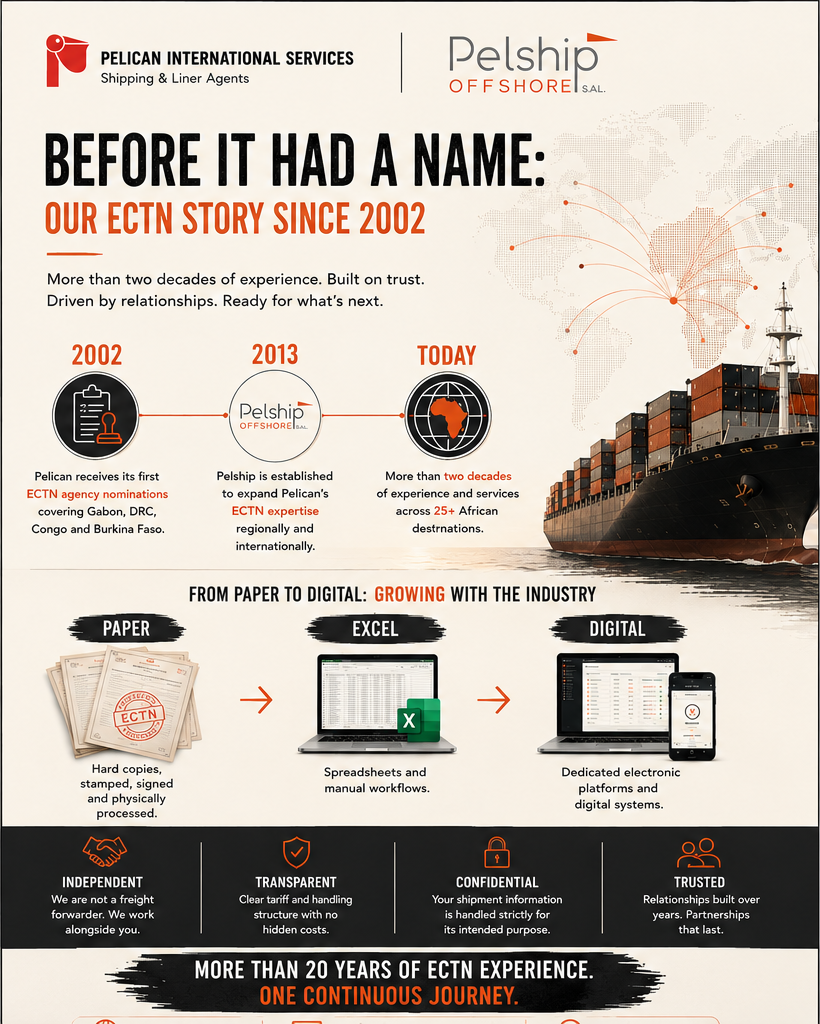
That was the world in 2002, when Pelican International Services received its first ECTN agency nominations, covering Gabon, the Democratic Republic of the Congo, Congo and Burkina Faso. There was no established playbook. No shared understanding across the shipping chain of what this new requirement even was, let alone why it mattered. Certificates were prepared on hard copies, physically stamped, physically signed, physically carried through a process that today would seem almost unthinkable.
We didn't inherit an established system. We helped build the understanding of one, one conversation at a time.
Teaching What Didn't Yet Have a Name
If you ask us what those early years actually looked like, it wasn't paperwork. It was explaining.
We found ourselves, again and again, walking exporters, shippers and freight partners through a concept that had no easy reference point. So we reached for one they already understood: think of it like a visa. Just as a visa gives a traveler the recognized authorization to enter a country, an ECTN gives cargo the recognized authorization to enter a port of destination in Africa, to be cleared correctly, and to move through customs without triggering the penalties that come with non-compliance. Issued by official, recognized parties, and honored precisely because it is.
It was a simple comparison, but it did something important: it turned an abstract compliance requirement into something people could feel the logic of.
Not everyone welcomed it. For many in the chain, this was one more document, one more step, one more thing standing between a shipment and the shore. "Extra admin" is the phrase we heard more than once. We understood the frustration. But we also understood, earlier than most, that this wasn't paperwork for its own sake. It was the difference between a shipment moving smoothly and a shipment sitting in demurrage while someone tried to explain, too late, why a required certificate was missing.
So we stayed in that uncomfortable, unglamorous space of being early. Of being the ones who had to make the case before the case was obvious. Of teaching the basics, over and over, to a logistics chain that hadn't yet been asked to think this way.
Building It From the Ground Up
What people don't always see is how much of this system, the one that today runs through polished digital platforms, was quite literally built alongside us.
We didn't just adopt procedures as they arrived fully formed. We worked directly with shipping councils as they implemented new requirements across our networks, testing system upgrades as they rolled out, flagging what didn't work, adapting as frameworks evolved from paper, to spreadsheets, to the dedicated electronic platforms in use today. We were there for the growing pains. We were there for the fixes. We were there, quietly, in the background, helping a young system mature into a reliable one.
That is not a small thing to have been part of. It shaped how we work today, because we don't just process a requirement, we understand where it came from, why it exists, and what it takes to get it right.
When Clients Become Partners, and Partners Become Something More
Somewhere in that long process of explaining, adapting and delivering, something shifted.
Relationships that began as transactions became something steadier. Clients who came to us once, uncertain, testing whether this whole ECTN thing was even necessary, came back. Then they stopped shopping around entirely, choosing instead to entrust us, shipment after shipment, with something that mattered to their business and, often, to their own clients waiting at the other end.
Trust like that isn't requested. It's built, slowly, through every shipment that arrived compliant, every deadline that was met, every question that was answered honestly even when the honest answer was inconvenient. Over the years, more than a few of those professional relationships became something we can only describe as friendship. That's not a marketing line. It's simply what happens when you go through this much history with people, and keep showing up for them.
From Local Expertise to a Regional and Global Reach
By 2013, the expertise we had built inside Pelican had outgrown its original footprint. Our client base extended beyond the local market, and the next step came naturally: Pelship Offshore SAL was established as a dedicated platform to carry that same expertise further, regionally and, eventually, globally.
Pelship did not begin a new story. It carried the one already written since 2002 into wider territory.
What started with four destinations expanded, gradually, deliberately, across Africa, as cargo-tracking requirements evolved under different names and regulatory frameworks: ECTN, CTN, BESC, BSC, BIETC, FERI and ACD. Today, Pelship supports shipping and logistics partners with these services across more than 25 African destinations. Much of that growth came the way it always had, through word of mouth, through people who had worked with us once and told someone else.
With a multilingual team and an international outlook, Pelship now serves clients across different markets, cultures and time zones. But the instinct at the center of it hasn't changed: professional independence, transparency and confidentiality. A clear tariff and handling structure, with no unnecessary layers or hidden costs. And because Pelship does not operate as a freight forwarder, we work alongside freight forwarders and logistics partners rather than in competition with them, handling the sensitive shipment information entrusted to us strictly for the purpose it was given.
That independence has never been a policy on paper. It's the reason so many of those early relationships lasted long enough to become partnerships.
One Continuous Journey
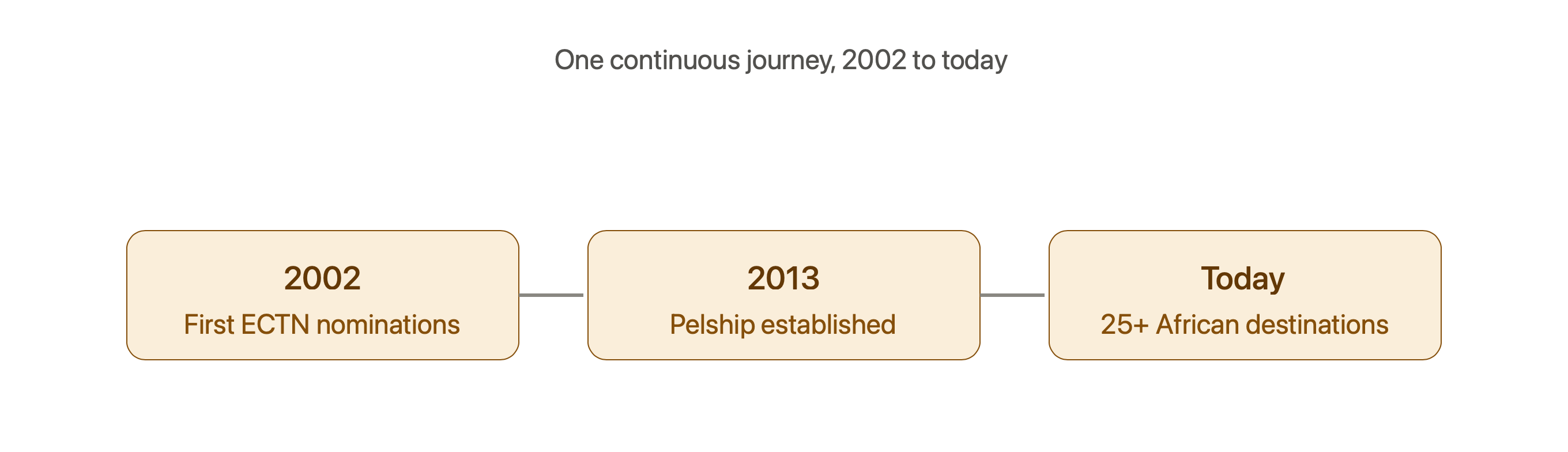
2002: Pelican receives its first ECTN agency nominations, and begins teaching a logistics chain what compliance would come to mean.
2013: Pelship is established, carrying that expertise into regional and international reach.
Today: More than two decades of experience, service across 25+ African destinations, and relationships that have outlasted every system upgrade along the way.
The certificates changed. The technology changed. The markets expanded far beyond what four destinations in 2002 could have suggested. What stayed constant was the reason we started explaining ECTN to a confused client in the first place: to make sure cargo, and the people responsible for it, arrive safely, correctly, and without penalty.
We were there before anyone knew what to call it. We're still here now that everyone does!
If your cargo is headed to an African destination and you're not sure where the compliance requirements start, that's exactly the conversation we're used to having. Reach out and we will handle the rest.